Primary outcome
- All-cause mortality at 24 weeks post-enrolment
A multicentre trial for advanced HIV care
REVIVE is a large-scale multicentre clinical trial evaluating the effectiveness of azithromycin prophylaxis in reducing mortality among adults with Advanced HIV Disease (AHD).
The trial is randomised and placebo-controlled, meaning that participants are equally allocated to receive either azithromycin or a matching placebo tablet; neither participants nor investigators know which treatment they have been allocated.
REVIVE is a pragmatic trial with all activities taking place within the context of routine care across 60 sites in 14 sub-Saharan African countries.
Antiretroviral therapy (ART) has made an enormous impact on reducing the number of deaths from HIV/AIDS. Despite widespread access to effective ART, a large number of people still have AHD.
People with AHD have very low CD4 cell counts (below 200 cells/mm³), a measure of their immunity, and are at high risk of HIV-related infections and early mortality, even after starting or restarting ART. This contributes to the persistently high number of HIV/AIDS-related deaths in sub-Saharan Africa.
For people living with AHD, severe bacterial infections like pneumonia and sepsis are common causes of hospitalisation and death. Individuals with CD4 counts below 100 cells/mm³ are particularly at risk.
In these individuals, such infections can progress rapidly to severe illness and death, and diagnostic tools for timely intervention are limited.
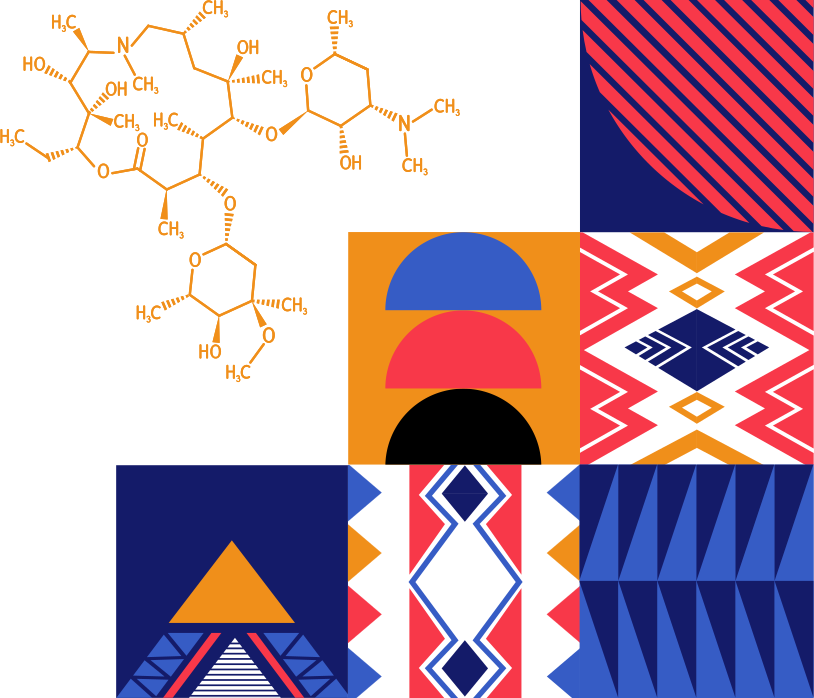
Azithromycin, a widely-used antibiotic, has shown promise in preventing bacterial infections in children and people with AHD. It is safe, accessible, and effective against a broad range of bacteria, including those commonly responsible for infections in HIV-positive individuals.
The [REALITY trial] demonstrated that adding azithromycin to a comprehensive treatment package significantly reduced mortality among people starting ART with low CD4 counts. These findings highlight azithromycin’s potential to save lives during the critical early months of ART initiation.
The REVIVE trial seeks to evaluate the independent effect of azithromycin in reducing early mortality among people with AHD.
Although azithromycin is not yet recommended as a standalone treatment in international HIV guidelines, research indicates it may provide significant protection against fatal infections during the high-risk period immediately after ART initiation.
If successful, the REVIVE trial will provide the evidence needed to support the widespread use of azithromycin as part of HIV care, potentially saving thousands of lives.
The REVIVE trial evaluates the effectiveness of azithromycin prophylaxis in reducing mortality among adults with AHD.




REVIVE aims to recruit 8,000 participants across 60 sites in 14 sub-Saharan African countries.
The study focuses on HIV-positive adults (over the age of 18) with AHD, specifically those with CD4 counts below 100 cells/mm³ who are either initiating, reinitiating, or switching to effective ART. This group is at high risk of early mortality within the first six months of ART.
Participants will be recruited from outpatient clinics and hospitals, with eligibility limited to those who are clinically stable and starting ART.
REVIVE investigates the use of azithromycin as a prophylaxis for people with AHD at risk of severe bacterial infection.
Participants are randomly allocated to receive azithromycin, a broad-spectrum antibiotic, at a dose of 250 mg daily, or an identical placebo, for four weeks. All participants receive local standard of care for AHD, including:
Azithromycin’s established safety profile, accessibility and potential efficacy make it a strong candidate for evaluation in a programmatic setting.