Immunology sub-study
Azithromycin-induced modulation of immunity and gut health in advanced HIV
Dr Ruby Bunjun from the University of Cape Town was awarded a 5-year UKRI and UK MRC African Research Leaders Fellowship to investigate non-antimicrobial mechanisms of action of azithromycin within the REVIVE trial.
She is a mucosal immunologist specialising in infectious diseases relevant to African health. She is supported by Professor Graeme Meintjes, Co-PI at Queen Mary University of London and the University of Cape Town, along with an experienced team of collaborators in South Africa and the UK.

Scientific rationale
In addition to antimicrobial activity, azithromycin also has immunomodulatory properties and an effect on mucosal epithelial integrity. This fellowship investigates these non-antimicrobial effects within the REVIVE trial, using cutting-edge techniques such as omics and flow cytometry.
Study focus
We hypothesise that azithromycin will favourably modulate HIV-associated immune activation and chronic gut injury, leading to improved outcomes.
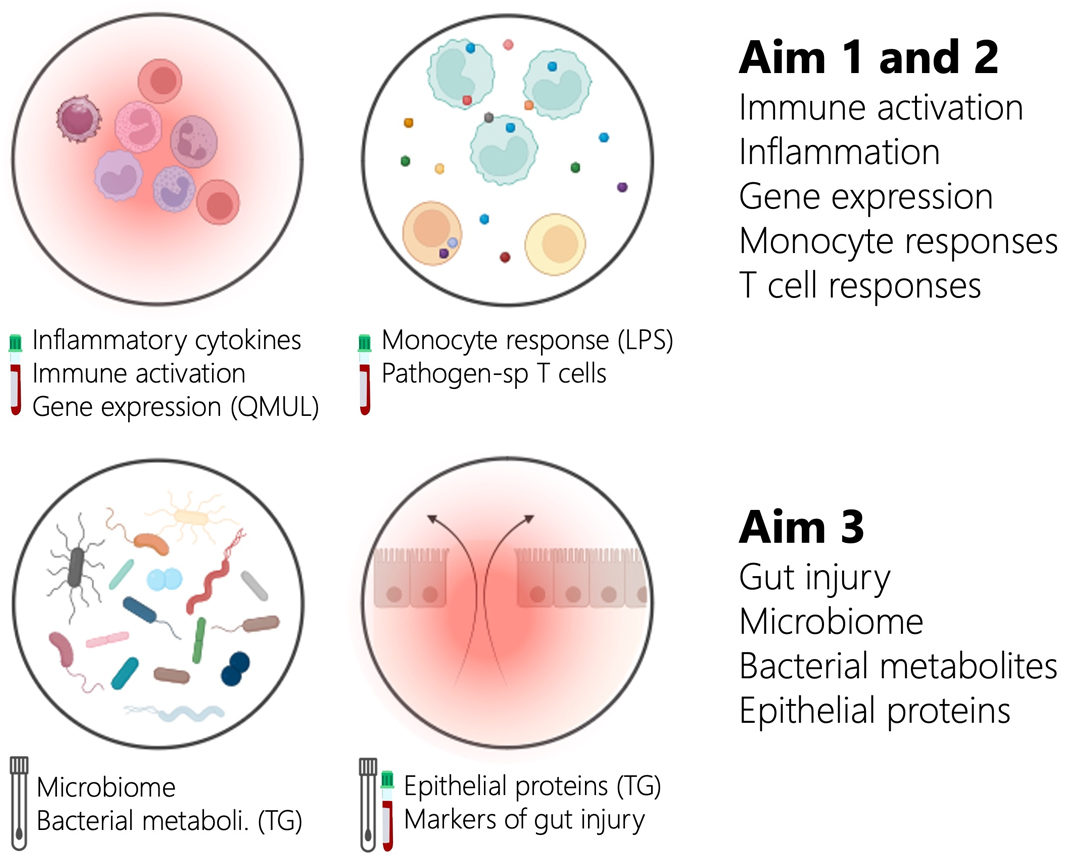
Study design and methods
To test this hypothesis, laboratory assays will be conducted on blood and rectal swabs collected at enrolment, four weeks and six months from 200 REVIVE participants.
Last updated date
2026-08-19
| Baseline | Week 4 | Week 24 | |||||
|---|---|---|---|---|---|---|---|
| Cape Town sites | Enrolment | Rectal swab | Blood | Rectal swab | Blood | Rectal swab | Blood |
| 101 | 19 | 19 (100%) | 19 (100%) | 19 (100%) | 18 (95%) | 7 (100%) | 7 (100%) |
| 104 | 41 | 41 (100%) | 41 (100%) | 28 (100%) | 28 (100%) | 3 (100%) | 3 (100%) |
| 108 | 3 | - | 3 (100%) | - | 1 (100%) | - | - |
| Total | 63 | 60 (100%) | 63 (100%) | 47 (100%) | 47 (97%) | 10 (100%) | 10 (100%) |
Contribution to the REVIVE trial
The findings from this sub-study complement the parent REVIVE trial and provide insights into how azithromycin can be used in resource-limited settings.